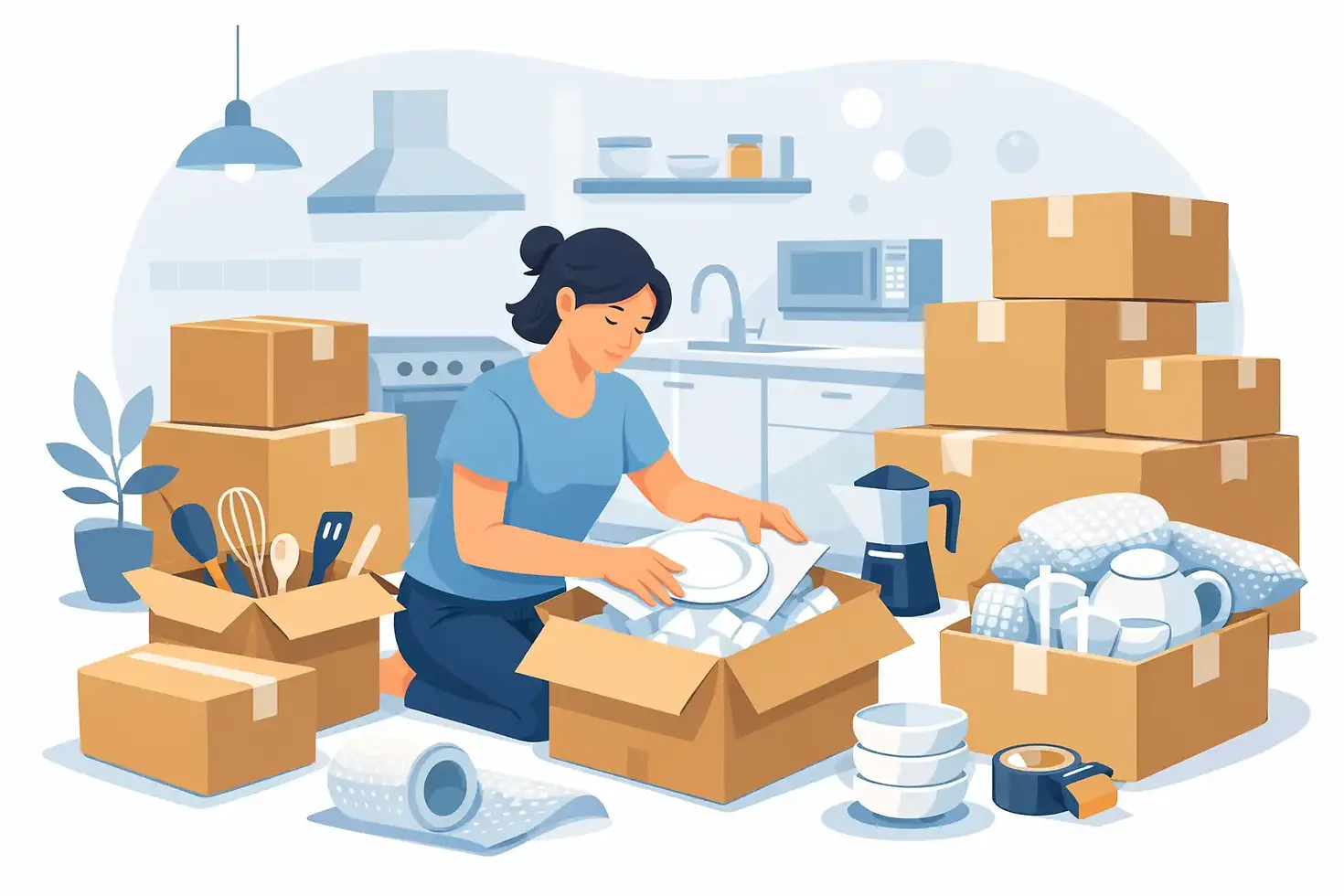
How to Pack a Kitchen Without the Stress

Packing a kitchen is where many moves start to feel real. It is also where small mistakes can turn into broken dishes, leaking bottles, and a lot of frustration on moving day. If you are wondering how to pack a kitchen without creating more stress for yourself, the key is to work in stages, protect fragile items properly, and keep only the essentials within reach.
The kitchen usually holds more breakable, awkward, and oddly shaped items than any other room in the house. Glassware, plates, serving bowls, small appliances, pantry goods, and sharp tools all need a slightly different approach. A calm, organized packing plan makes the job faster and helps protect the things you use every day.
How to pack a kitchen in the right order
The biggest mistake people make is trying to pack the whole kitchen in one shot. That usually leads to rushed wrapping, overfilled boxes, and confusion when it is time to unpack. A better approach is to pack in layers, starting with what you use least and ending with the items you need until the final day.
Begin with seasonal pieces, serving platters, specialty gadgets, and extra dishes. If you only use that roasting pan once or twice a year, it does not need to stay out until the night before the move. Next, move on to decorative items, spare mugs, baking tools, and pantry overflow. Save your daily plates, basic cookware, coffee supplies, and a few utensils for last.
This order gives you breathing room. Instead of shutting down your kitchen too early, you keep it functional while steadily reducing the amount left to pack.
Gather the right packing supplies first
Before you start wrapping anything, make sure you have enough materials nearby. Running out of packing paper halfway through a box often leads people to improvise with towels, loose bags, or rushed stacking that does not hold up well in transit.
For most kitchens, you will want sturdy small and medium boxes, packing paper, bubble wrap for extra-delicate pieces, packing tape, and markers for labeling. Dish packs can help for heavier breakables, but they are not always necessary if items are wrapped well and boxes are packed tightly enough to prevent shifting.
Small boxes are usually the safer choice for kitchen items. Plates, canned goods, and appliances get heavy quickly, and large boxes become hard to carry and easier to crush. A box that is slightly smaller but packed correctly is usually a better move than one oversized carton filled to the top.
Start by sorting before you pack
A move is a good time to be honest about what deserves space in the next home. Kitchens collect duplicates, expired pantry items, chipped mugs, mystery containers with missing lids, and gadgets that sounded useful but never became part of your routine.
As you pack, separate items into three groups: keep, donate, and discard. Throw away expired food, broken utensils, and anything that cannot be moved safely. Donate the pieces you no longer use but that are still in good condition. The less you pack, the less you have to protect, carry, and unpack later.
This step also reduces cost and clutter. If you are paying for packing materials or professional moving time, every unnecessary item adds to the workload.
Pack dishes and glassware with care
When people ask how to pack a kitchen, they are usually most worried about plates and glasses. That concern is justified. These items break easily, but the right method makes a big difference.
Wrap each plate individually in packing paper, then stack them vertically in the box rather than laying them flat in a heavy pile. Plates packed on their edges often handle movement better because the pressure is distributed differently. Add crumpled paper to the bottom of the box first, then fill all open spaces around the stack so nothing slides.
Bowls should also be wrapped one by one and nested carefully. Use extra paper between delicate pieces. For glasses and stemware, wrap each piece fully and cushion the interior if the item is especially fragile. Stemware needs more protection around the stem and base, since those are the areas most likely to snap.
Do not leave empty gaps in the box. Movement causes damage just as much as impact does. Once the box is full, add a layer of paper on top before sealing it, and label it clearly as fragile.
Handle pots, pans, and bakeware efficiently
Cookware is less fragile, but it can still be damaged if packed carelessly. Pots and pans can usually be nested to save space, with a layer of packing paper or a soft cloth between surfaces to reduce scratching. Lids should be wrapped separately or secured next to the matching pot so they do not rattle around.
Bakeware and casserole dishes need more attention. Glass or ceramic baking dishes should be wrapped individually and packed upright when possible. Heavy cast iron should go in smaller boxes with plenty of support at the bottom. It is durable, but it can damage other items if packed in the same box without separation.
There is a trade-off here between efficiency and protection. Combining too many kitchen categories into one box may save space, but it often creates disorganized unpacking and raises the risk of damage. Keeping breakables, heavy cookware, and pantry items mostly separate is usually worth it.
Pack small appliances the smart way
Small appliances can be awkward because of their shape, weight, and cords. Coffee makers, blenders, toasters, air fryers, and mixers should be cleaned and dried fully before packing. Even a little trapped moisture can cause odors or mildew during the move.
If you still have the original boxes, those are often the best option. If not, choose a box that fits closely enough to prevent sliding and use paper or padding around all sides. Remove loose parts when possible and wrap them separately. Tape cords neatly so they do not dangle or get bent.
Appliances with glass components need extra care. A blender jar, for example, should not just be left attached and dropped into a box. Separate the pieces, cushion them well, and mark the box so it is handled appropriately.
Deal with food and pantry items carefully
Pantry items are easy to underestimate. A few cans, bottles, and boxes can make a carton extremely heavy before you realize it. Pack canned goods in small boxes only, and do not mix too many dense items together.
Check all opened containers before packing. Spices, oils, sauces, and dry goods can leak or spill if lids are loose or packaging is weak. It is often better to use up perishable or half-open items before moving rather than transporting them. For sealed goods, group similar items together and consider placing anything that could leak into sealed bags first.
If you are moving a short distance, bringing a small cooler for refrigerated essentials can make the transition easier. For longer moves, it depends on timing and transport conditions. Some food simply is not worth the risk.
Set aside an essentials box
One of the best ways to reduce moving-day stress is to pack a kitchen essentials box that stays with you. This should include the items you will want immediately in your new home without opening five different cartons to find them.
Think practical, not ambitious. A few plates, cups, utensils, a skillet, a saucepan, a coffee maker, dish soap, paper towels, sponges, snacks, and basic food prep tools are usually enough. If you have children, add the items that support their normal routine. If you rely on a specific medication organizer or water bottle, keep that accessible too.
This box matters more than people expect. After a long moving day, having what you need for a simple meal or morning coffee can make the whole house feel more manageable.
Label for unpacking, not just for transport
A label that says kitchen is better than nothing, but it is not enough if you want an easier first night in the new place. Label boxes by category and priority. For example, write everyday dishes, pantry staples, glassware, baking tools, or coffee station. If a box is fragile, mark that clearly on more than one side.
This extra minute of labeling saves real time later. It also helps movers place boxes in the right area and handle delicate items more carefully. For households that want a smoother, more supported move, professional packing can remove much of this guesswork, especially in a room as detailed as the kitchen.
When professional help makes sense
Some kitchens are straightforward. Others are filled with fine china, heavy cookware, specialty appliances, or years of accumulated items that take more time than expected. If your schedule is tight or you are worried about protecting valuable pieces, professional packing support can be a practical choice rather than a luxury.
A full-service team like Legacy Movers can help streamline one of the most time-consuming parts of moving by using the right materials, proven packing methods, and a system that keeps items organized from start to finish. For busy families and professionals, that peace of mind often matters as much as the labor itself.
A well-packed kitchen is not about perfection. It is about creating order before the move, protecting what matters, and making your first day in the new home feel a little easier than the last day in the old one.


Comments